

Proactively Address Security Issues Across Your Software Development Life Cycle
Security shouldn't be an afterthought. It should be foundational to your development process.
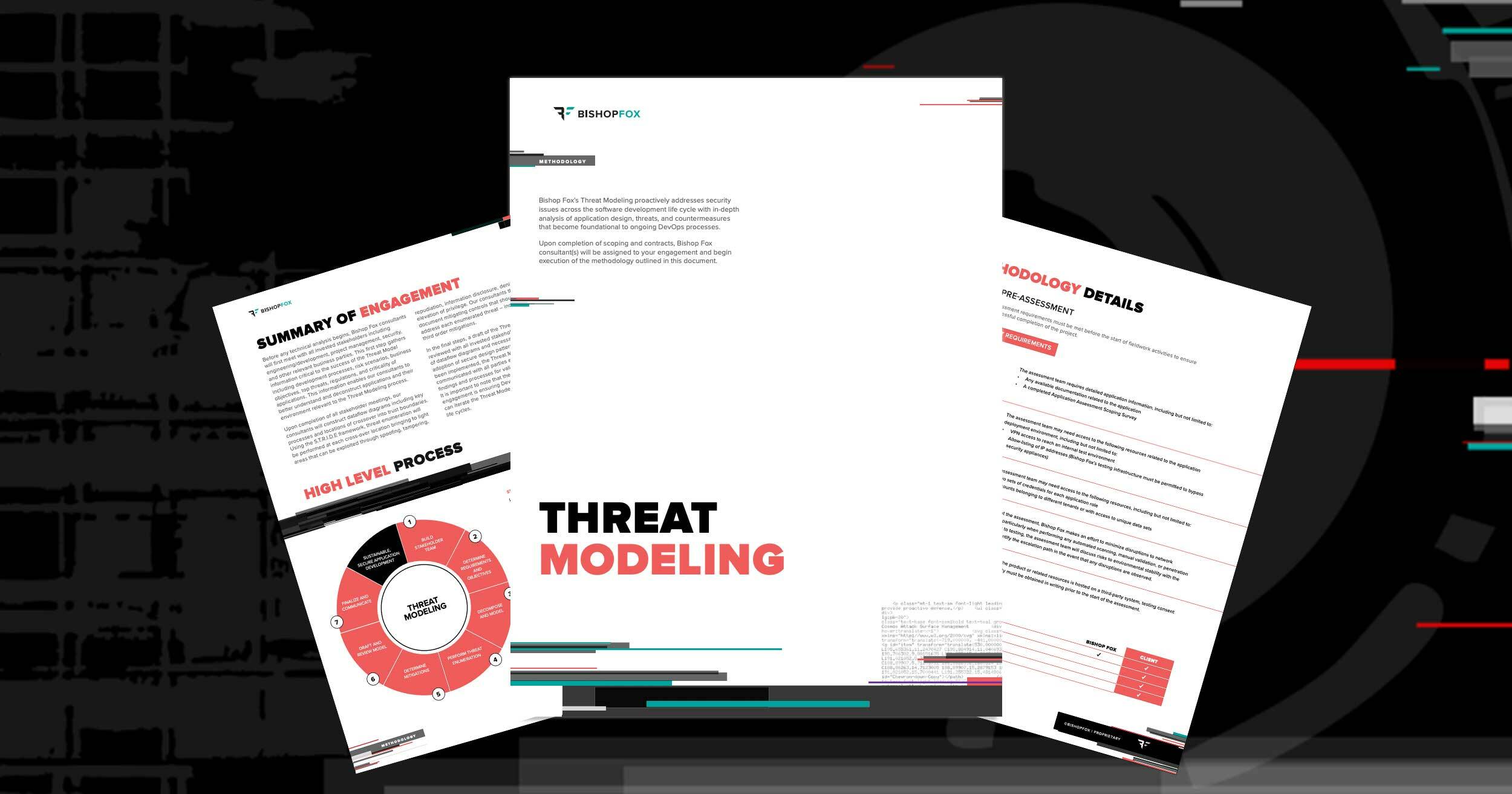
Bishop Fox's threat modeling methodology proactively addresses security issues across the software development life cycle with in-depth analysis of application design, threats, and countermeasures that become foundational to ongoing DevOps processes. Using the STRIDE framework, we identify and document security weaknesses before they become exploitable vulnerabilities—helping your team build security into applications from the start.
This comprehensive guide covers:
- The complete 7-step threat modeling process
- Stakeholder team building across DevOps, security, and business units
- Information gathering and objective setting
- Application decomposition and dataflow diagram creation
- STRIDE-based threat enumeration (Spoofing, Tampering, Repudiation, Information Disclosure, Denial of Service, Elevation of Privilege)
- Mitigation strategy development including first, second, and third order controls
- Draft review and finalization process
- Delineation of responsibilities between Bishop Fox and client teams
WHY THREAT MODELING
Threat modeling shifts security left in your SDLC by:
- Identifying security issues during design—before development begins
- Reducing remediation costs by addressing threats early
- Creating reusable security patterns for your development teams
- Integrating security into DevOps processes
- Providing clear documentation of threats and mitigations
- Enabling your teams to iterate threat models independently
The primary outcome isn't just a document—it's ensuring your DevOps and security teams can iterate the threat model across future development life cycles.
THE STRIDE FRAMEWORK
Our methodology uses STRIDE to systematically identify threats:
- Spoofing: Threats where an adversary assumes a different identity
- Tampering: Threats where an adversary modifies data or code
- Repudiation: Threats where an adversary denies performing malicious activity
- Information Disclosure: Threats that expose protected data to unauthorized parties
- Denial of Service: Threats that degrade or eliminate access for legitimate users
- Elevation of Privilege: Threats where an adversary gains higher privilege levels
Each threat is assessed for exploitability, prevalence, detectability, and technical impact to prioritize mitigation efforts.
WHO SHOULD READ THIS METHODOLOGY
- Security leaders integrating security into development processes
- DevOps and development teams adopting secure design practices
- Security architects designing application security controls
- Product security teams building threat modeling programs
- Organizations evaluating threat modeling approaches